LINQA: From Supplier Performance Manager to B2B SaaS Co-Founder
2026
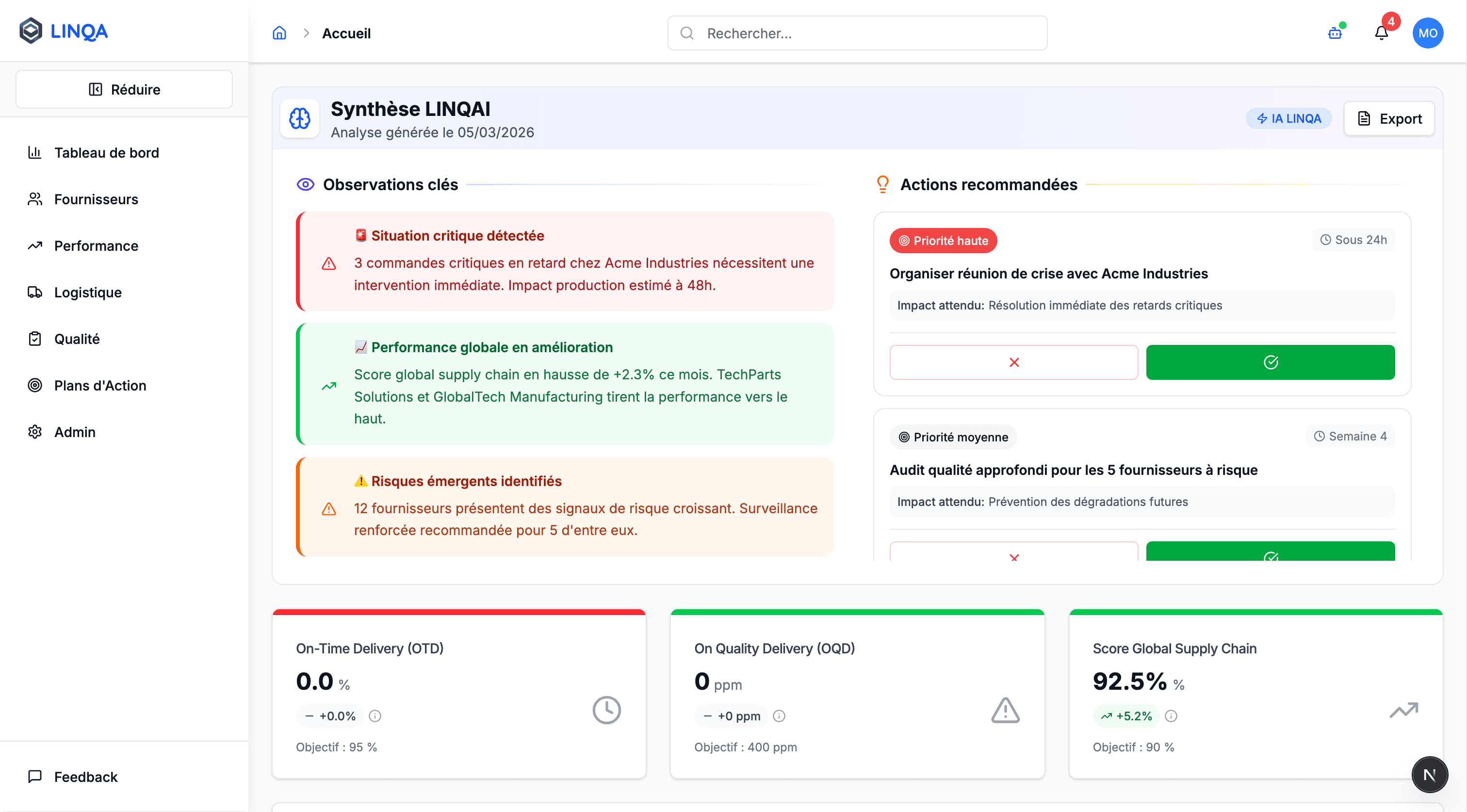
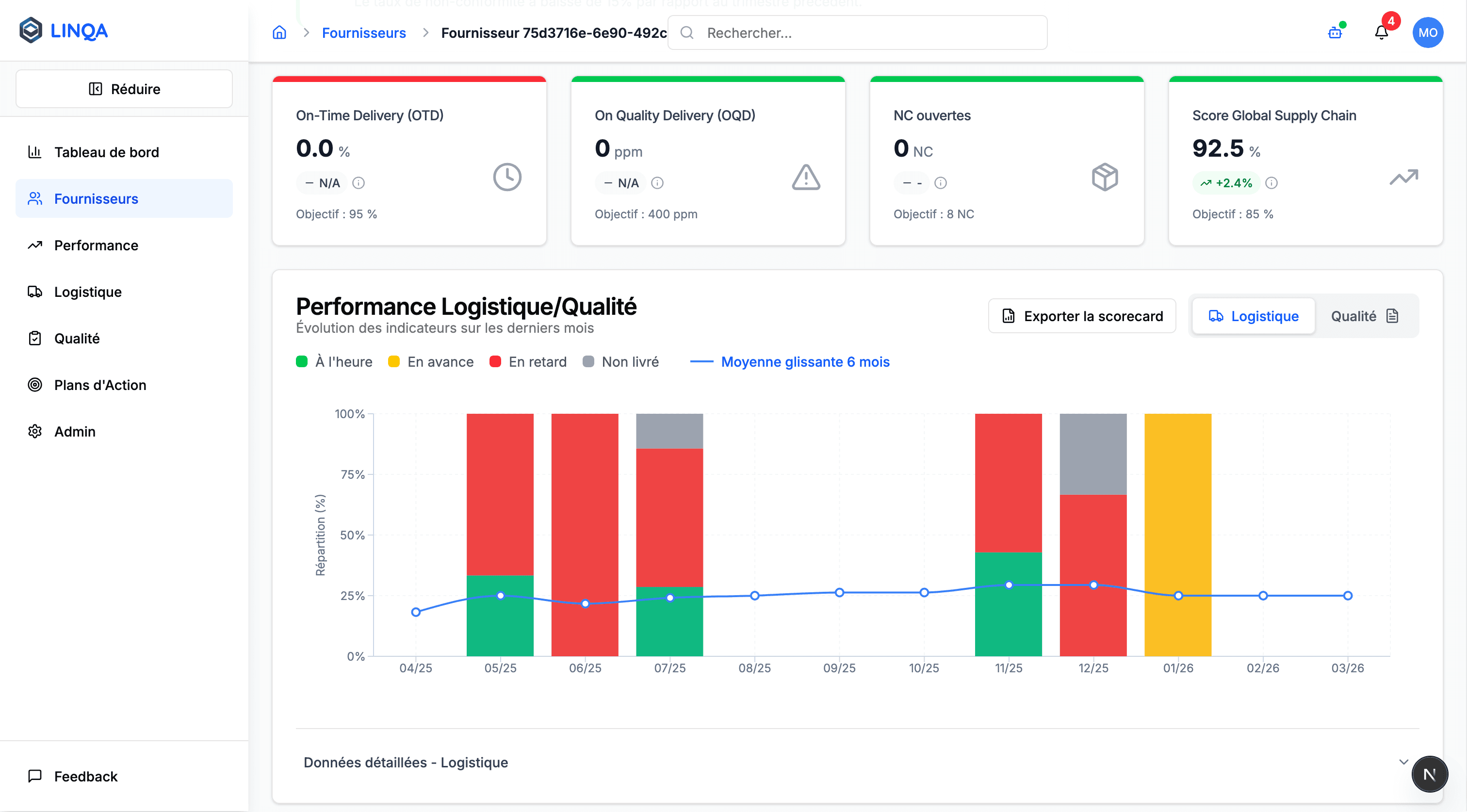
The main dashboard with the AI summary and real-time KPIs
TL;DR : LINQA
The Project:A B2B SaaS that replaces supply chain Excel files with a centralized cockpit for quality, delivery, and supplier risk.
Stack:Next.js 16, Supabase (PostgreSQL), TypeScript, Tailwind CSS v4, Recharts.
The Challenge:Building a multi-tenant architecture locked down by Row Level Security from the MVP stage, as the sole developer with Claude Code.
The Result:Near-functional MVP shipped in 6 months. Target market estimated at €3.66B in Europe. Shut down due to lack of funding.
Ten years juggling Excel files, moody ERPs, and supplier reviews held together with duct tape. One morning, I stopped working around the problem. I decided to fix it. LINQA is the B2B SaaS I wish I'd had on the shop floor when I was running supplier performance in defense and aerospace. The long-term goal? Build the go-to platform for industrial SMEs and mid-caps across Europe.
01.The Problem, Seen from the Inside

From fragmented data chaos to a centralized solution: LINQA's product approach.
Ten years in defense and aerospace. Ten years tracking the performance of high-stakes suppliers, in environments where one late delivery can bring an entire production line to a halt.
And the routine? It never changed. Every Monday morning, we'd crack open a shared Excel file, try to line up ERP data with quality reports, hack together an OTD calculation with macros, then copy-paste the numbers into a PowerPoint so the supplier review would look halfway decent.
The data was there. Scattered across spreadsheets, inboxes, and software systems that flat-out ignored each other. Information wasn't the bottleneck. What was missing was a single place to turn all of it into something you could actually act on. A tool built for the factory floor, not the boardroom.
For the SMEs and mid-caps I worked with, it was even worse. Who, in a 200-person company, has the bandwidth to play data analyst between two production fires?
LINQA grew out of that pile-up of quiet frustrations.
02.From a Shop-Floor Frustration to a Startup
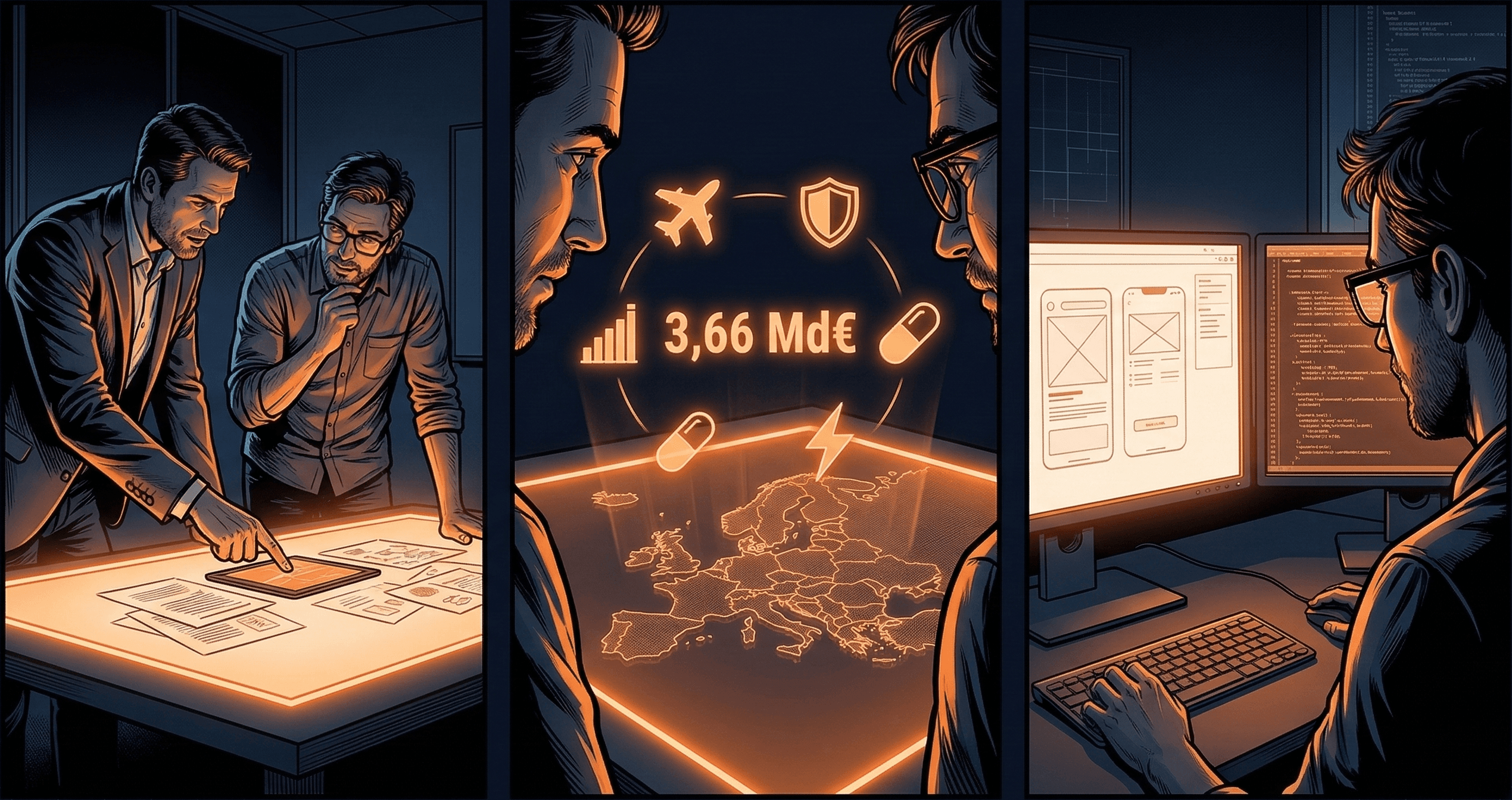
From fragmented data chaos to a centralized solution: LINQA's product approach.
The entrepreneurial itch had been sitting in the back of my head for years. LINQA was the spark.
My co-founder brings serious commercial chops and hands-on startup experience. Together, we kicked things off the right way: user interviews, market sizing. The basics, but done properly.
The numbers backed us up. The SRM/QMS space for industrial SMEs and mid-markets weighs in at €3.66 billion across Europe. Powered by re-industrialization, pulled forward by high-stakes verticals (aerospace, defense, pharma, energy) that can no longer afford to wing their traceability.
Our roles clicked into place on their own. My field background, paired with a growing appetite for tech, put me on the product and engineering side. My title, CPTO (Chief Product and Technology Officer), sums up what I love doing most: figure out exactly what the product needs to solve, then build it myself.
03.What LINQA Does, the Cockpit at a Glance
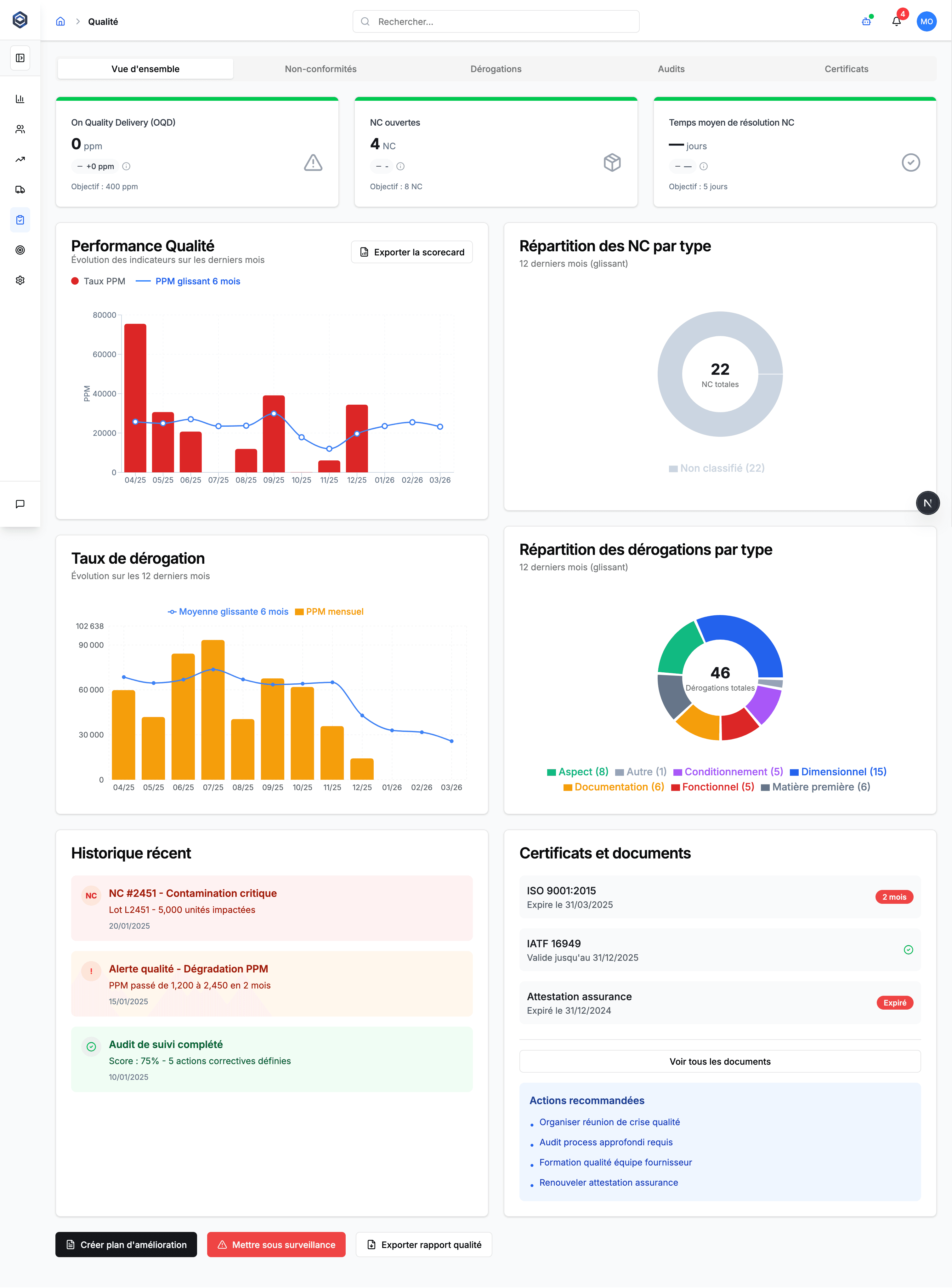
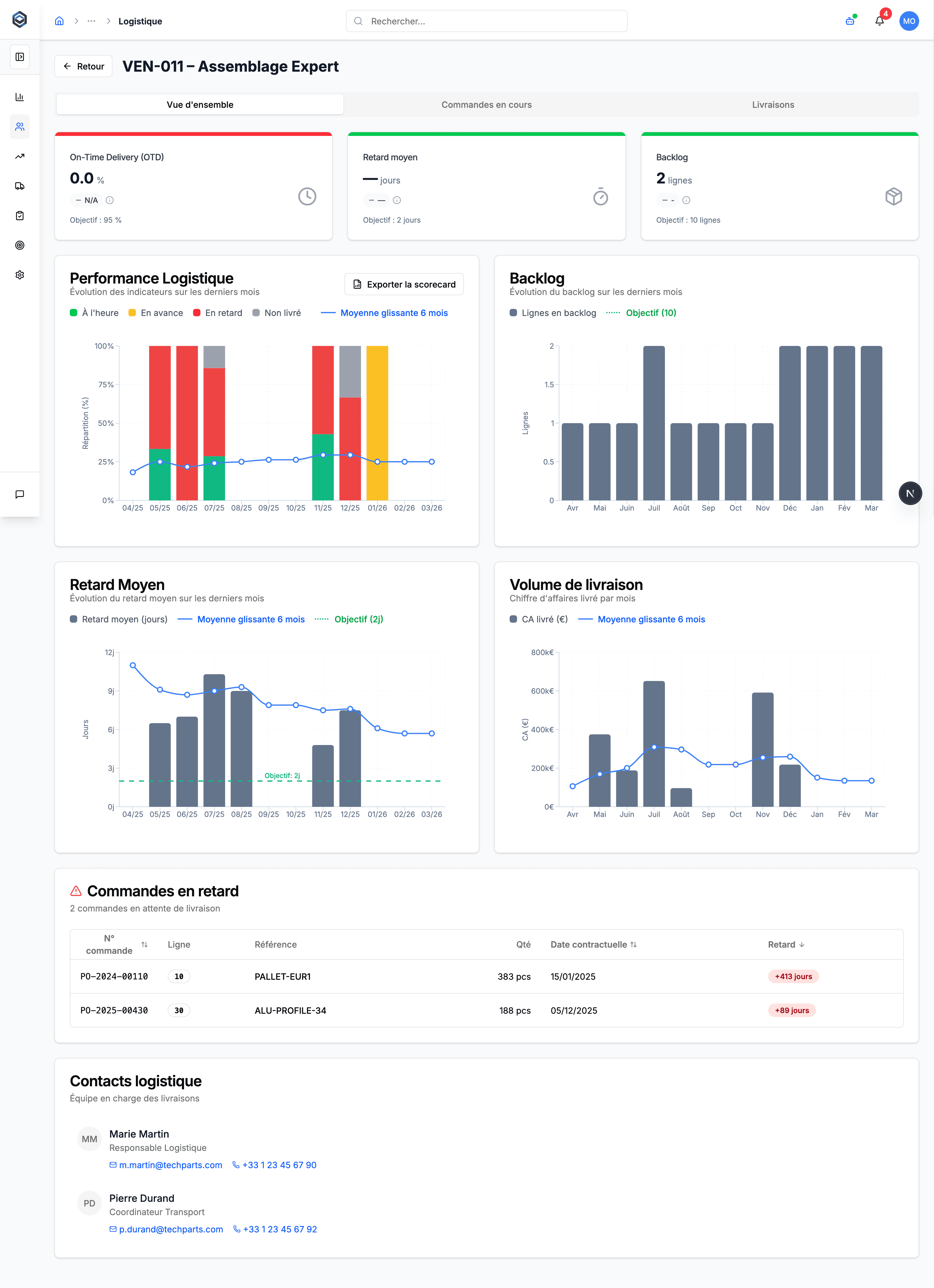
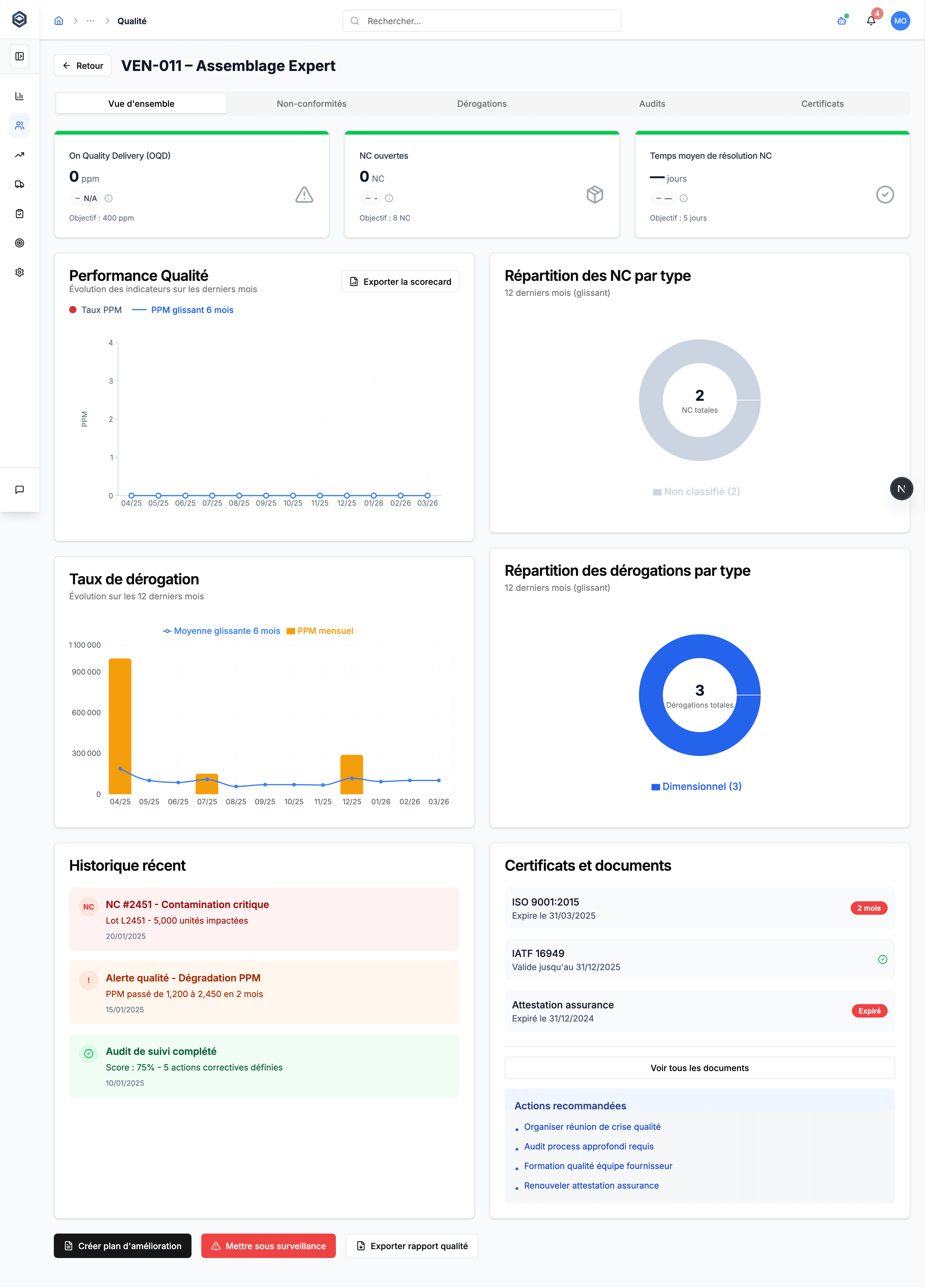
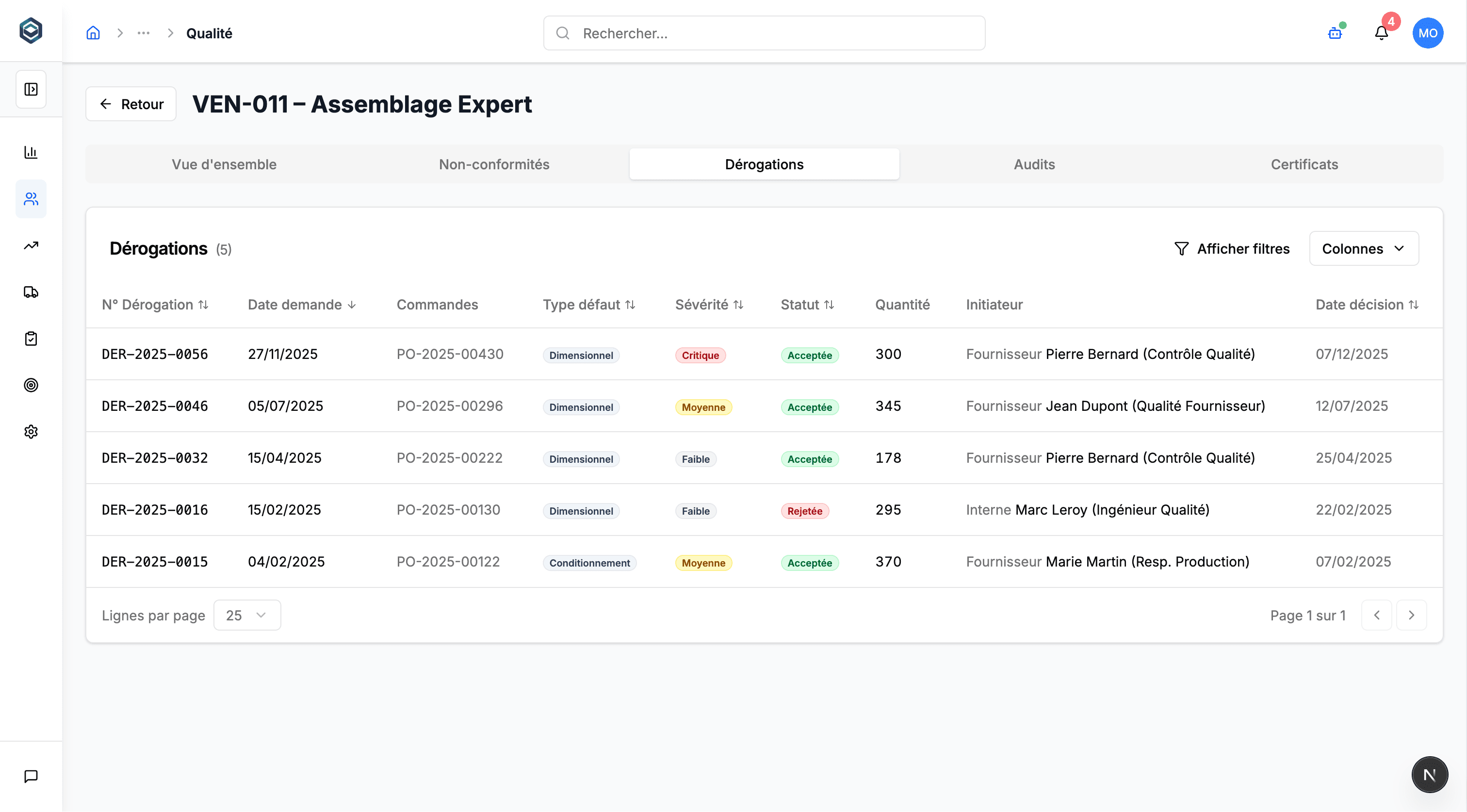
From fragmented data chaos to a centralized solution: LINQA's product approach.
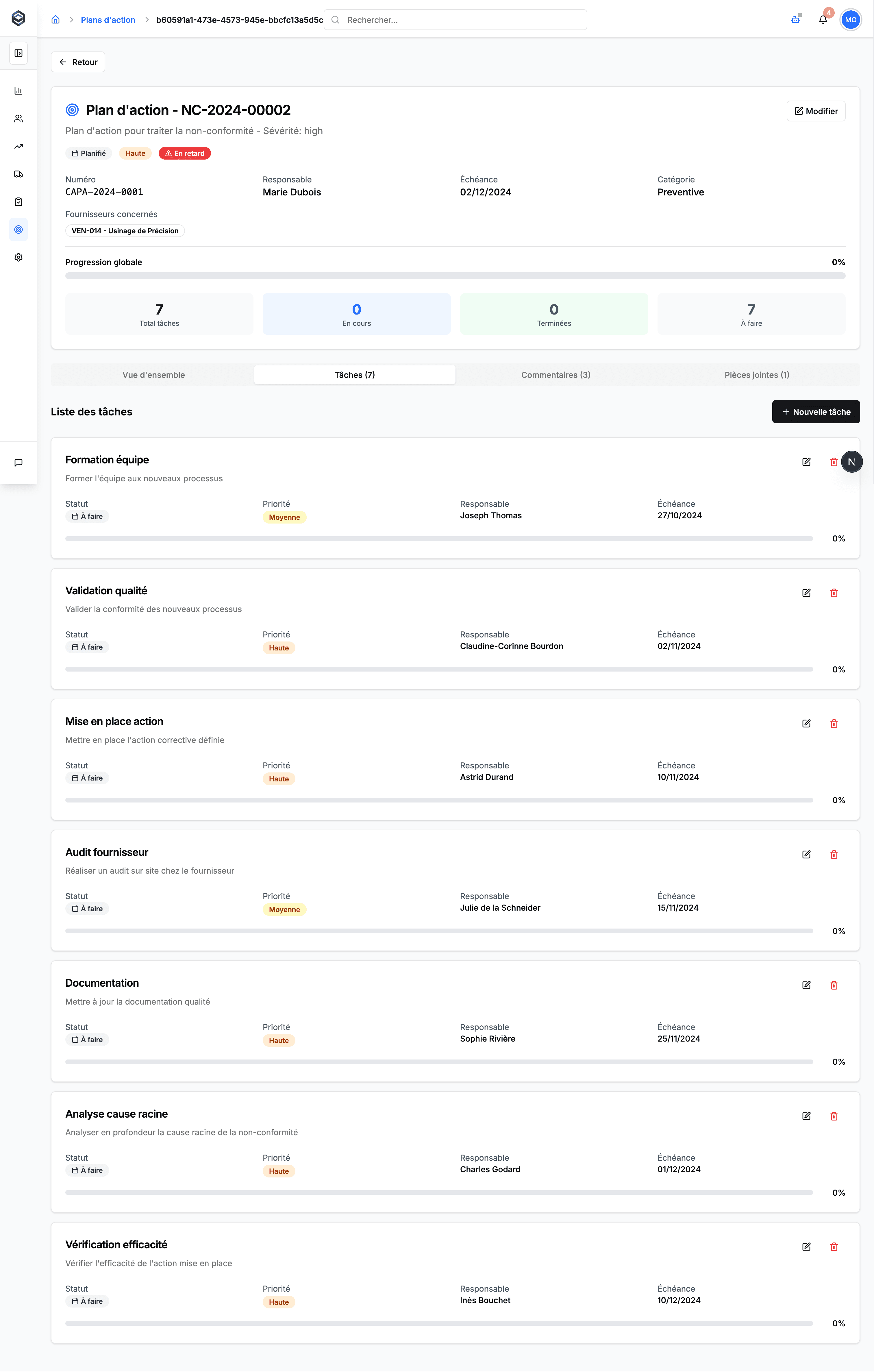
In practice, LINQA swaps out the spreadsheets for a modular, predictive cockpit. Five business modules, each built around a specific pain point:
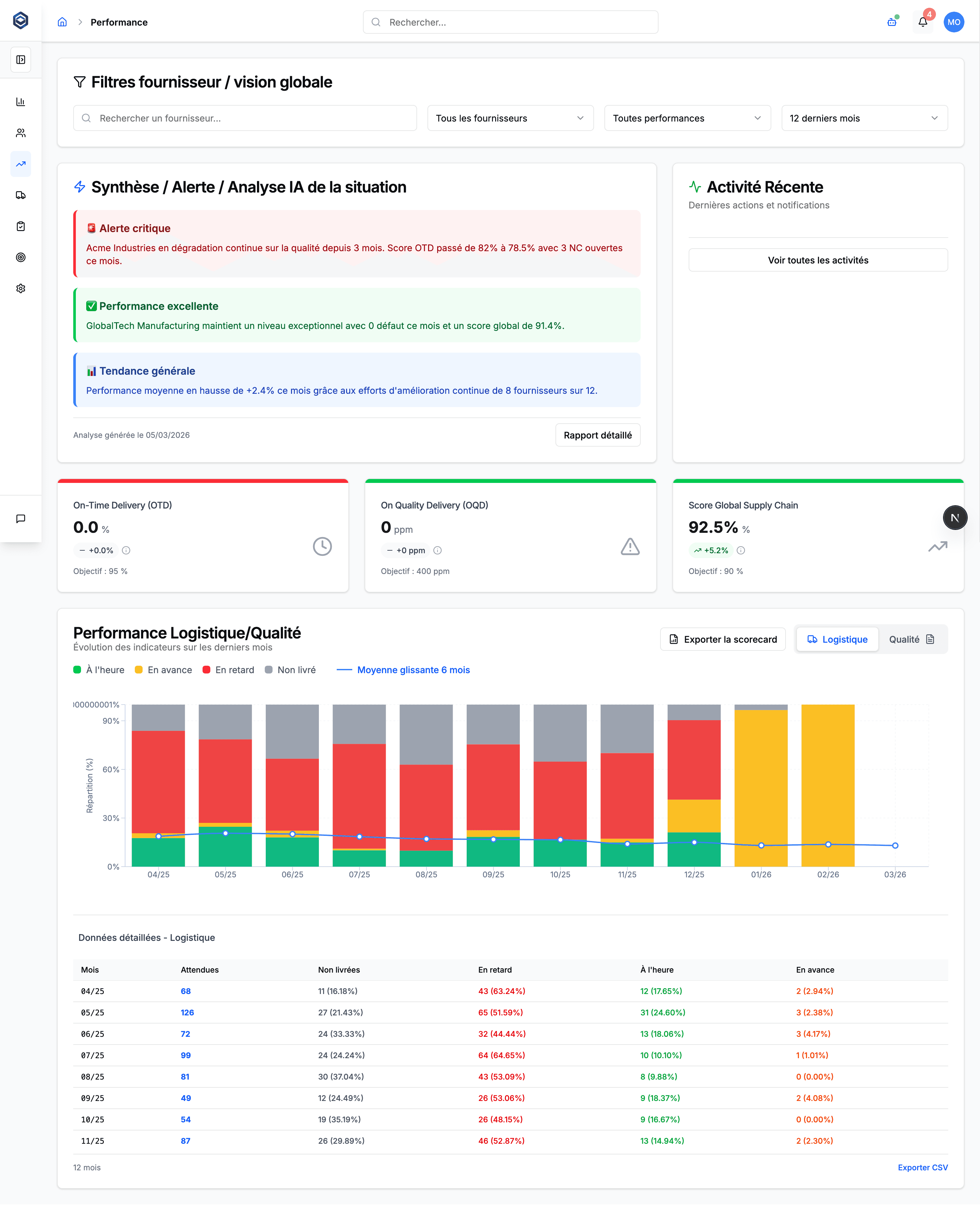
• Performance: the big-picture dashboard. Supply chain KPIs (OTD, OQD, PPM), monthly trends, alert thresholds, consolidated score. The view every supply chain director dreams of pulling up on Monday morning • Logistics: open orders, delays, backlog. Granular filtering by operator, date, quantity, because a delay without context tells you nothing • Quality: non-conformities and waivers with a real workflow (open → analyze → close), severity badges, and full history • Action Plans: corrective actions tied to quality incidents. The follow-through that turns a one-off problem into lasting improvement • LINQAI: the AI layer that chews through live data to surface prioritized recommendations and contextual alerts
Every company (tenant) lives inside a sealed-off space. Quality manager, buyer, supply chain director: everyone works in the same tool, each with their own permissions.
The expected payoff? 50% productivity boost on reporting and follow-up, 10% cut in supply chain costs. But the real shift is somewhere else: moving from a team that puts out fires to a team that spots the smoke first.
04.The MVP Architecture: Built for Scale from Day One
From fragmented data chaos to a centralized solution: LINQA's product approach.
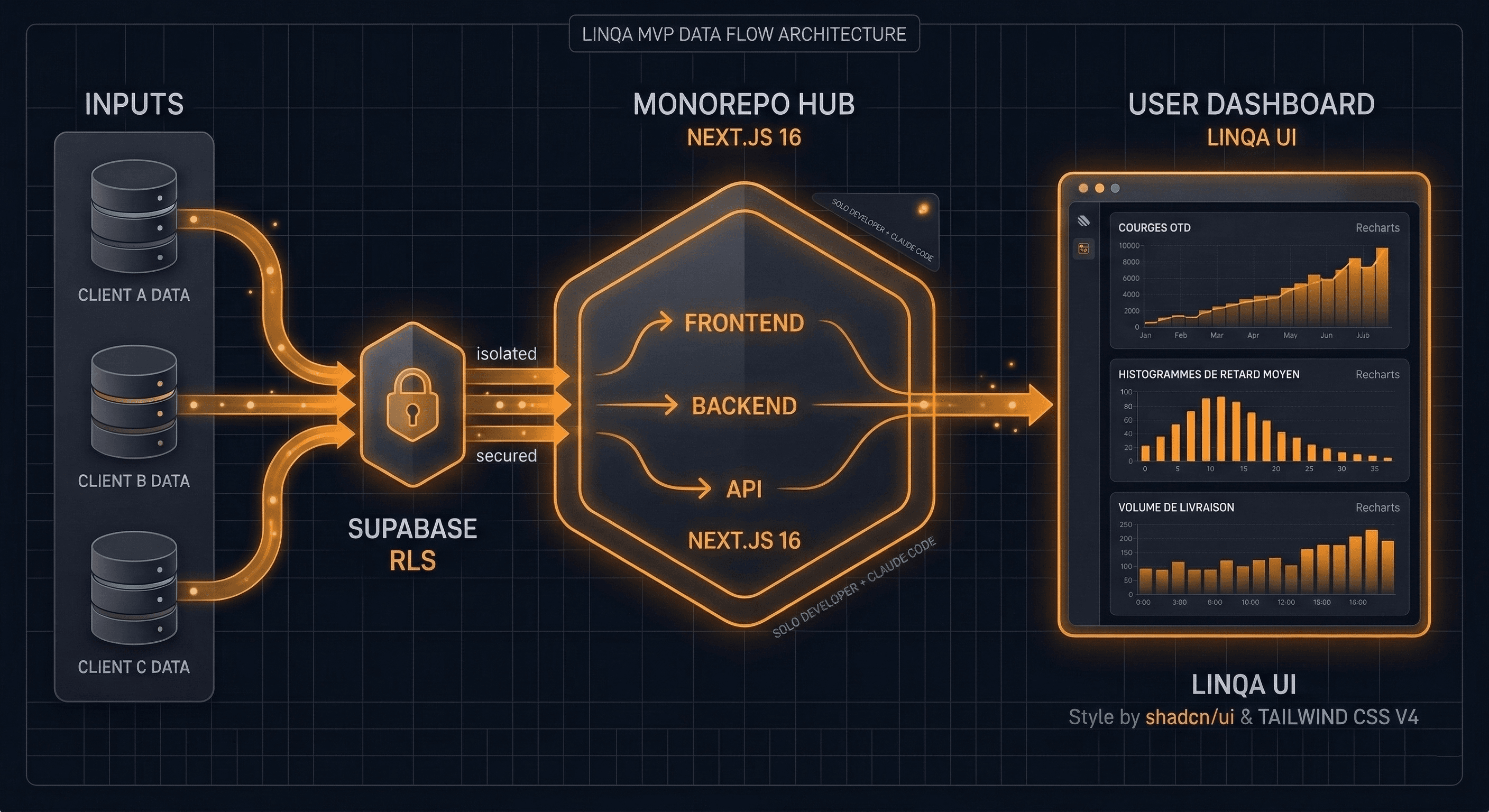
No tech choices made for fun. Every brick in the stack answers a real business constraint.
1. One developer at the start. Me (backed by Claude Code). I needed to ship fast without cutting corners. Next.js 16 with the App Router and React 19 Server Components gave me frontend, backend, and API in a single repo. Spinning up microservices at this stage? Pointless.
2. Multi-tenancy baked in from day one. You don't bolt on data isolation after the fact. That kind of technical debt always blows up eventually. Supabase (PostgreSQL) with Row Level Security locks things down natively, on every single SQL query, so each client only ever sees their own data.
3. A product that earns trust on the first click. In industry, the demo is the moment of truth. The interface leans on shadcn/ui and Tailwind CSS v4, taking cues from what Stripe and Linear set as the bar. Clean typography, tight spacing, micro-interactions, accessible Radix UI components.
For dataviz, Recharts does the heavy lifting: average delay histograms, rolling 6-month OTD curves, delivery volume charts.
05.Security by Design, the Real Industrial Challenge
When you build a SaaS for SMEs in defense, energy, or aerospace, one requirement towers above everything else: confidentiality. Full stop. If data on a critical subcontractor's performance leaks out, it's the product's credibility that collapses. And yours with it.
The entire foundation of LINQA rests on something invisible but non-negotiable: tenant isolation.
I could have coded manual filters on every page, every request. Plenty of people do. But that approach has a structural flaw: it depends on human discipline. And humans forget a filter at 11 PM on a Friday night.
So I pushed all the security logic down to the lowest possible layer: straight into PostgreSQL, through Row Level Security. The database itself acts as the guardrail. Every query carries a strict context. If that context doesn't match the data being requested, access gets denied at the source. Not at the app level. Not at the API level. At the source.
That architectural segregation is what separates a web app from a real industrial platform.
06.The AI Vision: From Raw Data to Weak Signals
From fragmented data chaos to a centralized solution: LINQA's product approach.
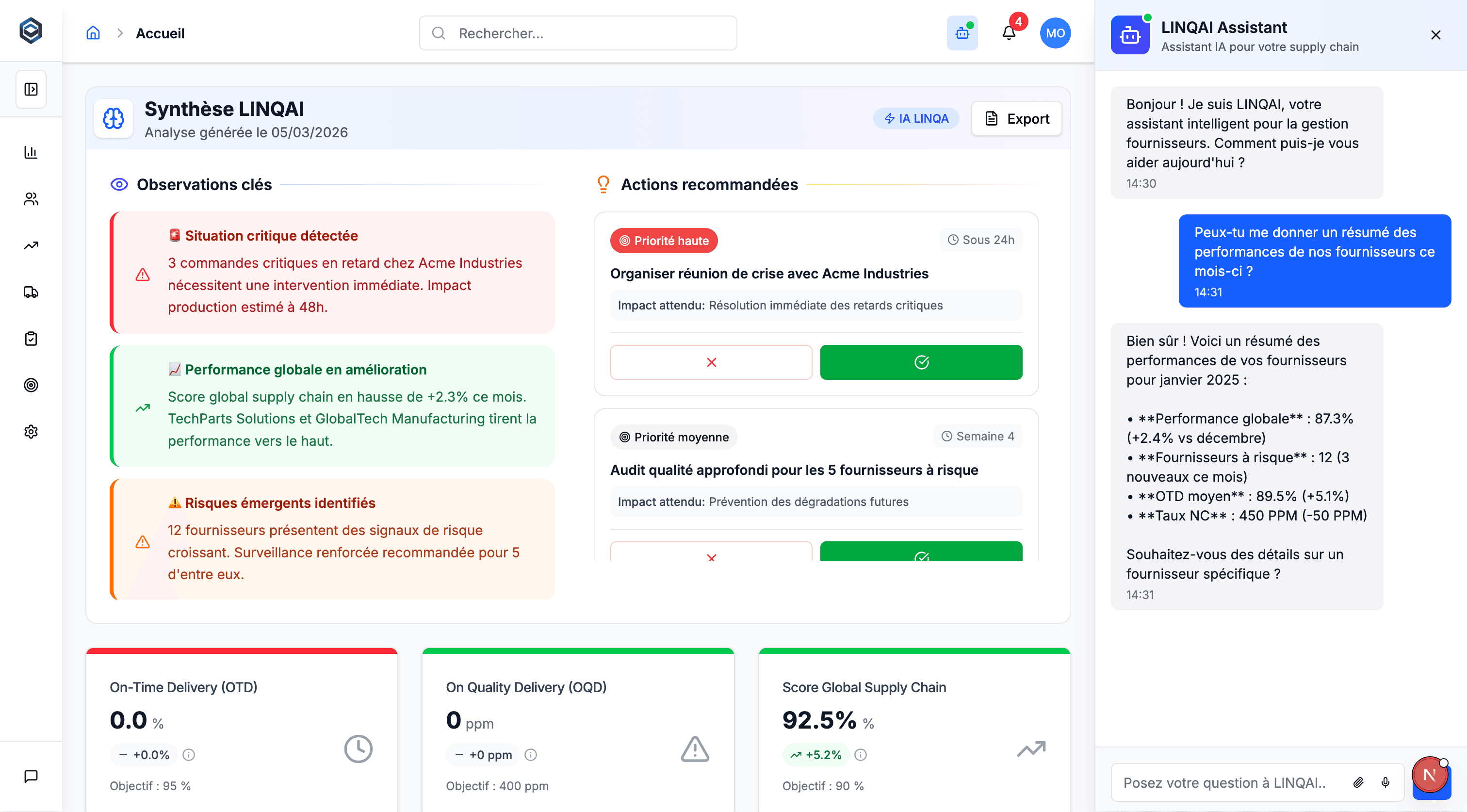
AI in LINQA was never a buzzword slapped on a brochure. It was the core product differentiator.
Why? In supply chain, collecting data isn't the hard part. Reading it, understanding it, cross-referencing it, that's a whole different ball game. An average delay creeping up 2% month over month at one supplier. An OTD sliding quietly for three months straight. These are weak signals. When you're tracking 50 suppliers, those micro-drifts fly under the radar. AI had to catch what the human eye lets slip.
The module was designed to be contextual, not generic: • Global dashboard → consolidated risk summary • Supplier profile → targeted recommendations, grounded in that supplier's track record • Quality module → spotting recurring patterns in non-conformities
Under the hood, the architecture followed the same blueprint as the rest of the app. A server component that pulls the data, a client component that renders it. The only difference: between the two sits an analysis layer that flags anomalies and ranks the actions to take.
07.Where Does LINQA Stand Now?
Six months of intense development. A near-functional MVP at the finish line. But not the AI module. The fundraising fell through.
Without that round, there was no way to secure the platform long-term or build the feature that was supposed to carry the differentiator. We made the call, tough but clear-eyed, to shut down the venture.
No regrets. And I still believe, deep down, that a tool like this is exactly what industrial companies are missing.
LINQA pulls together everything that drives me today. Ten years of industry turned into a tech product. A secure multi-tenant architecture I designed and built myself, a modern stack I know inside out (Next.js, Supabase), and above all, the reflex to think "Product" before thinking "Code."
This project won't be the next European unicorn. But it's been my best accelerator, my toughest proving ground. It confirms what I want to do next: build tech products that solve real business problems. With pragmatism. With high standards. And with that small dose of obsession that makes you actually look forward to opening the codebase on Monday morning.